Pressure Sore Healing Stages: What to Expect

I’m not the doctor. I’m the patient. This article combines published information with lessons from my own experience of living with serious pressure sores. It is intended to help you understand the subject and ask better questions of your healthcare team, not replace medical advice.
Table of Contents
The Four Pressure Sore Healing Stages Explained
Haemostasis and Inflammation: The First Response
Proliferation: Building New Tissue
Remodelling: Strengthening the Repair
What a Healing Pressure Sore Actually Looks Like
How Long Pressure Sore Healing Time Really Takes
Signs of Pressure Sore Infection You Should Never Ignore
Nutrition for Pressure Sore Healing: Protein, Collagen and Key Nutrients
What Slows Healing Down and What Helps
When Healing Stalls: Questions to Ask Your Wound Care Team
Frequently Asked Questions
Last Updated: September 23, 2026
The Four Pressure Sore Healing Stages Explained
Understanding pressure sore healing stages matters because the wound you're looking at today will not look the same in two weeks, and knowing what is normal stops panic in its tracks. The single most useful thing anyone can learn is that wound healing is not a straight line. It moves through four overlapping phases, and each one has its own appearance, timescale and risks.
I'm not a doctor. I'm the patient. This article combines published information with lessons from my own experience of living with serious pressure sores. It is intended to help you understand the subject and ask better questions of your healthcare team, not replace professional medical advice.
These four phases are haemostasis, inflammation, proliferation and remodelling, and they describe the biology of tissue repair rather than the severity of a pressure sore. They are not the same as the Stage 1 to Stage 4 pressure ulcer classification system, and a pressure sore does not necessarily move through them in a neat, predictable order. The phases also overlap, so a wound's appearance can change from one week to the next. A wound that looks worse rather than better should not be assumed to be healing normally; it needs assessment by a wound care professional.
Haemostasis and Inflammation: The First Response
Haemostasis is the body's immediate response to tissue damage. Blood vessels constrict and clotting mechanisms begin working to control bleeding and stabilise the damaged area. This early response is followed by the inflammatory phase.
Inflammation follows straight after. The area becomes red, warm, swollen and sore. Many people mistake this for infection, but a degree of inflammation is a normal part of the process. Telling normal inflammation apart from infection is not something you can reliably do just by looking, so any deterioration, spreading redness, feeling unwell, or possible signs of bone involvement needs prompt assessment by your wound care team.
Proliferation: Building New Tissue
Proliferation is the phase where the body builds new tissue to fill the wound. It usually runs from around day four to day twenty-one, though this varies hugely between individuals.
During this phase you will typically see:
New pink or red tissue forming at the wound base
Reduced wound depth as the cavity fills
Less exudate than in the inflammatory phase
Fresh skin beginning to form at the wound edges
This is the phase where pressure relief, nutrition and infection control matter most. Chronic wounds can stall or be disrupted by continued pressure or shear, infection, poor circulation, poor nutrition or other underlying medical problems, so any of these slipping can interrupt proliferation.
Remodelling: Strengthening the Repair
Remodelling is the final phase, where new tissue is reorganised and strengthened. It can continue for months after the wound has closed.
The skin over a healed pressure sore is never as strong as it was before. It is more vulnerable to shear, friction and pressure, which is why recurrence is so common. Protecting that tissue after healing is a separate job from healing the wound itself.
What a Healing Pressure Sore Actually Looks Like
A healing pressure sore moves through several biological phases as new tissue forms, and the changes are usually gradual rather than dramatic. These phases are separate from the Stage 1 to 4 classifications used to describe how severe or deep a pressure injury is — the biological phases describe how a wound is repairing, not how serious it is. Progress is not always a neat straight line; you are watching for a direction of travel rather than a single snapshot.
Healing Phase | Typical Appearance | What to Watch For |
Haemostasis | Blood clot, dark red wound bed | Excessive bleeding |
Inflammation | Red, warm, swollen edges | Worsening rather than settling |
Proliferation | Pink granulation tissue, shrinking wound | No change over two weeks |
Remodelling | Closed, pale, fragile new skin | Breakdown under pressure |
A common mistake is judging a wound by its size alone. Depth, colour, smell and the state of the surrounding skin all matter just as much.
How Long Pressure Sore Healing Time Really Takes
Pressure sore healing time varies enormously depending on the grade of the wound, its location, your general health and how consistently pressure is relieved. A superficial sore may close in a few weeks. A deep ulcer involving muscle or bone can take many months, and some require surgery.
The NHS guidance on pressure ulcers notes that healing depends heavily on relieving pressure and treating any underlying infection. That is not a throwaway line. In my experience, the wounds that stalled were almost always the ones where pressure relief had quietly slipped.
Factors that extend healing time include:
Continued pressure or shear on the wound
Poor nutrition, especially low protein intake
Infection, including deep infection such as osteomyelitis
Diabetes, smoking and poor circulation
Certain medications, including some steroids
If you take nothing else from this section: healing time is not fixed. It responds to what you do around the wound.
Signs of Pressure Sore Infection You Should Never Ignore
Signs of pressure sore infection include spreading redness, increasing pain, foul odour, thick or discoloured exudate, and a wound that stops improving or starts getting worse. These are the signals that should prompt a same-day conversation with your wound care team.
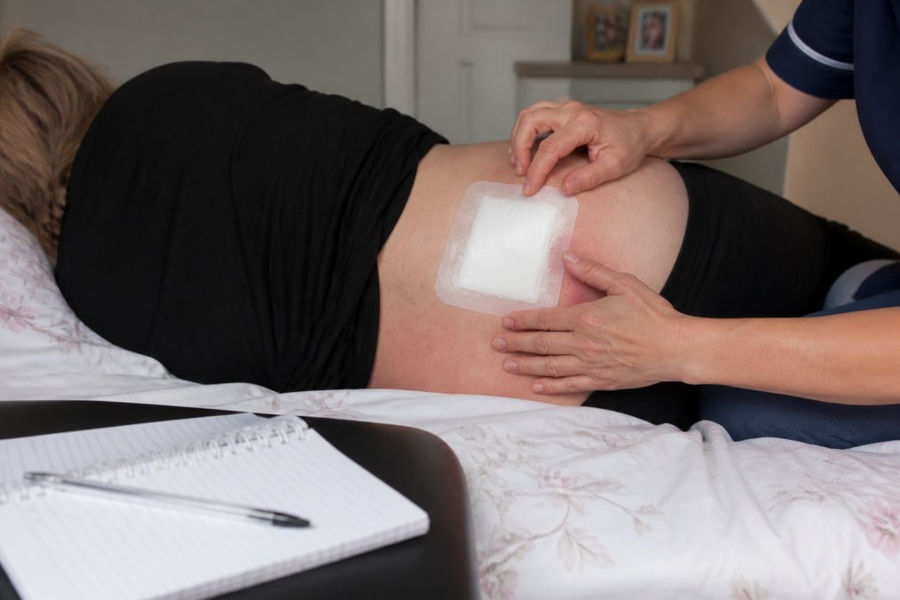
Delayed healing usually has more than one cause: infection, continued pressure or shear on the wound, poor perfusion, nutrition problems and other medical factors can all slow things down. Infection can stay superficial, or it can track deeper into surrounding tissue. Deep wounds are sometimes complicated by bone infection (osteomyelitis), which needs specialist assessment and can be harder to treat.
Watch Out A wound that smells offensive, produces green or grey discharge, or develops a dark, hard crust at the edges needs urgent review. Suspected infection, spreading redness, feeling systemically unwell, or any sign of possible bone involvement all need prompt professional assessment.
Watch for fever, feeling generally unwell, or new pain in a wound that had been settling. Those systemic signs matter as much as what you can see on the surface.
Nutrition for Pressure Sore Healing: Protein, Collagen and Key Nutrients
Nutrition for pressure sore healing is not a side issue, it is one of the main levers you control. New tissue is built from protein, and collagen provides the scaffolding that gives healed skin its strength.
Adequate energy, protein and overall nutrition matter for wound repair, and the body prioritises vital organs first, so repair can come further down the list when intake is poor. Anyone with a significant wound should have their nutrition assessed where appropriate.
Nutrients that may support healing include:
Protein: eggs, fish, poultry, dairy, beans and lentils
Vitamin C: supports collagen formation
Zinc: supports tissue repair and immune function
Vitamin A: helps with skin regeneration
Fluids: dehydration slows everything down
Pro Tip Spreading protein intake across the day, rather than relying on one large meal, can be easier to manage, particularly if you are spending long periods lying down.
If eating is difficult, ask your team about referral to a dietitian. This is a routine request, not an overreaction.
What Slows Healing Down and What Helps
Chronic wounds can stall or be disrupted by several factors: continued pressure or shear, infection, poor circulation, inadequate nutrition, or other underlying medical problems. Healing speeds up when those factors are identified and managed consistently. The frustrating part is that the things that help are rarely dramatic. They are boring, repetitive and easy to let slide.
What helps:
Relieving pressure on a proper schedule, not when it becomes painful
Keeping the wound bed moist and the surrounding skin dry
Treating infection early and completely
Eating enough protein and staying hydrated
Attending every wound clinic appointment, even when things look fine
What slows it down:
Skipping repositioning because "it feels okay today"
Using random creams or dressings without advice
Smoking, which restricts blood flow to the wound
Ignoring a wound that has stopped changing
The NICE guidance on pressure ulcer management is clear that pressure redistribution is the foundation of care. Dressings and creams support that foundation. They do not replace it.
When Healing Stalls: Questions to Ask Your Wound Care Team
Healing stalls when one of the underlying drivers has not been addressed, and the fastest way to find it is to ask direct questions. Bring a written list. It changes the conversation.
Questions worth asking:
Has the wound changed stage or depth since last review?
Is there any sign of deep infection or bone involvement?
Is my current pressure relief plan actually working?
Should I see a dietitian about protein intake?
Would a different dressing or specialist referral help?
What would make you consider surgery?
Key Takeaway You are not being difficult by asking these questions. You are doing the part of recovery that nobody else can do for you, which is paying attention to your own body over time.
The World Health Organisation's patient safety resources emphasise that informed patients who ask questions tend to get better coordinated care. That has certainly matched my own experience.
Pressure Sore Recovery exists for exactly this reason. The 24-chapter guide, Pressure Sore Recovery: What Nobody Told Me, covers nutrition, protein, collagen, infection, osteomyelitis, surgery and prevention in plain language, written from the patient's side of the bed rather than the clinician's.
Healing a pressure sore is slow, unglamorous work, and the hardest part is often the stretch where nothing seems to be changing.
Frequently Asked Questions
What are the four stages of pressure sore healing?
Healing follows four overlapping phases: haemostasis (clotting), inflammation (cleaning the wound), proliferation (building new tissue), and remodelling (strengthening the repair). These are biological healing stages, not the same as the Stage 1 to 4 classification used to grade pressure sore severity. A wound can be a Stage 3 ulcer and still be in the proliferation phase of healing. Understanding both systems helps you follow what your wound care team is describing.
How long does pressure sore healing time take?
Healing time varies widely. Superficial sores may close in a few weeks, while deeper wounds or those over bony prominences can take months. Stage 3 and Stage 4 ulcers often need several months of consistent pressure relief, wound care and good nutrition. Factors like infection, poor blood supply, diabetes, and malnutrition all extend healing time. Your wound care team can give you a realistic estimate based on the wound's size, depth and your overall health.
What are the signs of pressure sore infection I should watch for?
Watch for increased redness spreading beyond the wound edges, warmth, swelling, pus or foul-smelling discharge, and worsening pain. A fever, chills or feeling generally unwell suggest the infection may be spreading. If the wound stops shrinking or starts to enlarge, that can also signal infection. Contact your GP, district nurse or wound care team promptly if you notice any of these signs, as early treatment is far easier than managing a deep infection or osteomyelitis.
Does nutrition for pressure sore healing really make a difference?
Yes. Healing tissue needs protein to rebuild, plus vitamin C, zinc and other nutrients for collagen formation and immune function. Many people with pressure sores are undernourished without realising it. A dietitian can assess your intake and recommend protein-rich foods, supplements or fortified drinks if needed. Good nutrition will not heal a sore on its own, but poor nutrition makes healing slower and recurrence more likely.
BUY THE PDF - £9.99


Comments