Signs Your Wound Is Not Healing: Pressure Sore Guide

Table of Contents
Signs Your Wound Is Not Healing: What I Learned as a Patient
The signs I was told to watch for
Routine review, urgent assessment, emergency symptoms
Pressure Sore Not Healing: Why Slow Healing Does Not Automatically Mean Infection
Pressure Ulcer Infection Signs You Should Not Ignore
THE QUESTION I LEARNED TO ASK: WHY ISN'T THIS HEALING?
Pressure Sore Causes of Delayed Healing: Looking Beyond the Dressing
Pressure Sore Wound Care Review: What a Proper Assessment Should Cover
What Matters Most Before You Contact Your Team
Frequently Asked Questions
Last Updated: 7 October 2026
Signs Your Wound Is Not Healing: What I Learned as a Patient
I'm Not a Doctor, I'm the Patient.
I'm not a doctor. I'm the patient. This article combines published information with lessons from my own experience of living with serious pressure sores. It is intended to help you understand the subject and ask better questions of your healthcare team, not replace professional medical advice.
Knowing the signs your wound is not healing matters more than most people realise. I learned that the hard way, over almost six years of pressure sores, infection and setbacks. Everything I write comes from that lived experience, combined with NHS, NICE and peer-reviewed guidance.
A pressure sore that stalls is not always infected. That single sentence took me years to understand.
Below, I'll show you the signs that should trigger a conversation with your wound team, how to tell routine review from urgent assessment from emergency, and the one question I wish I had asked far sooner.
The signs I was told to watch for
These are the changes that should prompt reassessment, based on what my wound team explained to me and on published pressure-injury guidance:
The wound stops shrinking or improving over weeks
It gets bigger, deeper, or reopens after improving
Drainage increases, changes colour, or smells different
The skin around it turns red, warm, or swollen
New areas of tissue break down nearby
Pain increases where you have sensation
You feel generally unwell, feverish, or confused
Some of these are subtle. A wound that simply sits still for a fortnight can be easy to dismiss. But "not getting worse" is not the same as "healing".
Routine review, urgent assessment, emergency symptoms
Not every change needs a trip to A&E. Some need a call to your wound team this week. Others need help now.
Category | Signs | What to do |
Routine review | Wound static for weeks, no odour, no redness | Raise at your next wound clinic appointment |
Urgent assessment | Increasing size or depth, new odour, changing drainage, spreading redness or warmth | Contact your wound team promptly |
Emergency | Fever, confusion, rapidly spreading redness, feeling systemically unwell | Seek urgent medical help immediately |

Watch Out If you develop a fever, confusion, or redness that is spreading quickly, do not wait for your next appointment. These can signal serious infection and need urgent medical assessment.
Pressure Sore Not Healing: Why Slow Healing Does Not Automatically Mean Infection
A pressure sore that is slow to heal is not automatically infected. That distinction matters, because treating a non-infected wound with antibiotics does nothing and can cause harm.
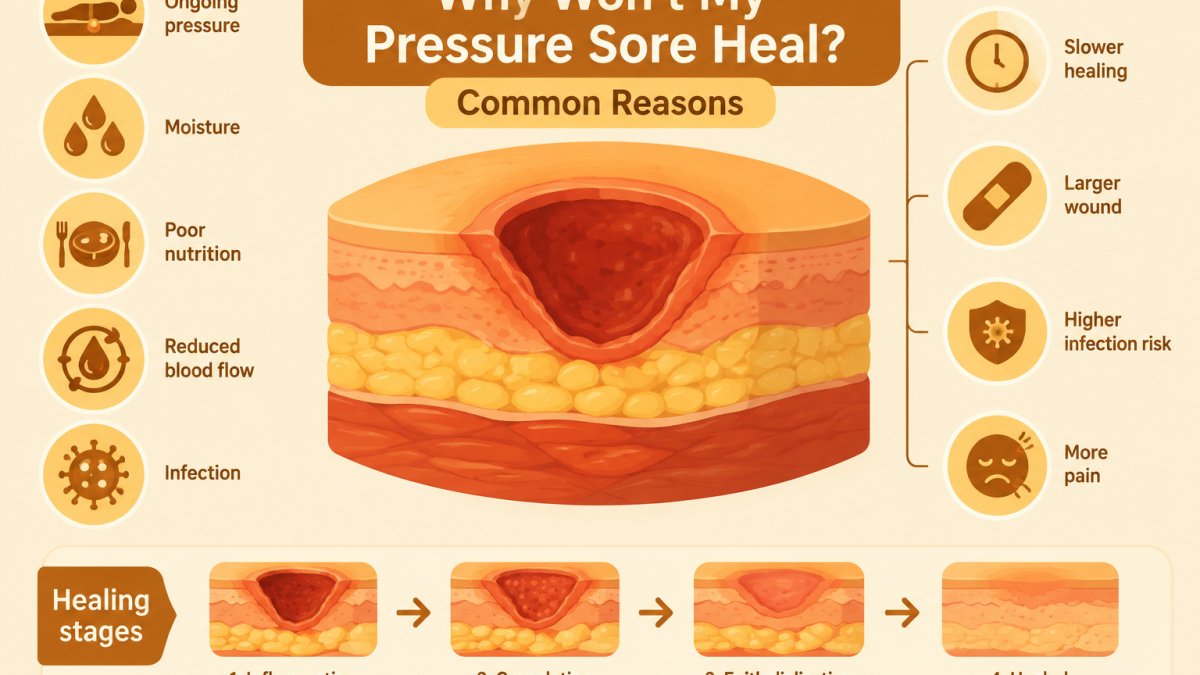
Infection is only one possible barrier. Others include:
Continued pressure or shear on the same area
Poor nutrition, low protein, or dehydration
Excess moisture or maceration around the wound
Poor circulation or underlying illness
Deeper complications, such as bone involvement
In my own case, the wound kept stalling because I was still loading the same spot, not because of infection. Nobody explained that to me at first.
Clinical guidance from the National Institute for Health and Care Excellence (NICE) on pressure ulcers stresses that pressure redistribution and offloading are central to healing. Dressings alone cannot compensate for ongoing pressure or shear.
Pressure Ulcer Infection Signs You Should Not Ignore
Some pressure ulcer infection signs need professional assessment quickly. These include spreading redness, increasing warmth, new or worsening odour, pus-like drainage, and feeling systemically unwell.
I have written separately about infection in pressure sores and about osteomyelitis, because both deserve their own space. What I would say here is this: suspected infection, deterioration, or possible bone involvement needs proper assessment, not guesswork.
Deep or longstanding wounds can raise the risk of bone involvement, but depth alone does not confirm it. That is a clinical question, not a visual one.
Key Takeaway Slow healing and infection are two different problems. One may cause the other, but treating them as the same thing can send you down the wrong path.
THE QUESTION I LEARNED TO ASK: WHY ISN'T THIS HEALING?
The question that changed my care was simple: "Why isn't this healing?"
For months, appointments focused on dressing changes. Nobody stepped back and asked what was blocking healing in the first place. Once I started asking that question directly, the conversation shifted.
Questions I would ask now:
Is pressure or shear still affecting this area?
Could nutrition or hydration be a factor?
Is there any sign of infection or deeper involvement?
Should we review my offloading equipment?
What would tell us this plan is not working?
If you want a fuller framework for these conversations, the 24-chapter guide Pressure Sore Recovery: What Nobody Told Me covers them in detail: BUY THE PDF - £9.99.
Pressure Sore Causes of Delayed Healing: Looking Beyond the Dressing
Pressure sore causes of delayed healing usually sit outside the dressing itself. The barriers I encountered included ongoing pressure, poor nutrition, and moisture.
Pressure and shear: the single biggest factor. If the area is still loaded, it will struggle to heal.
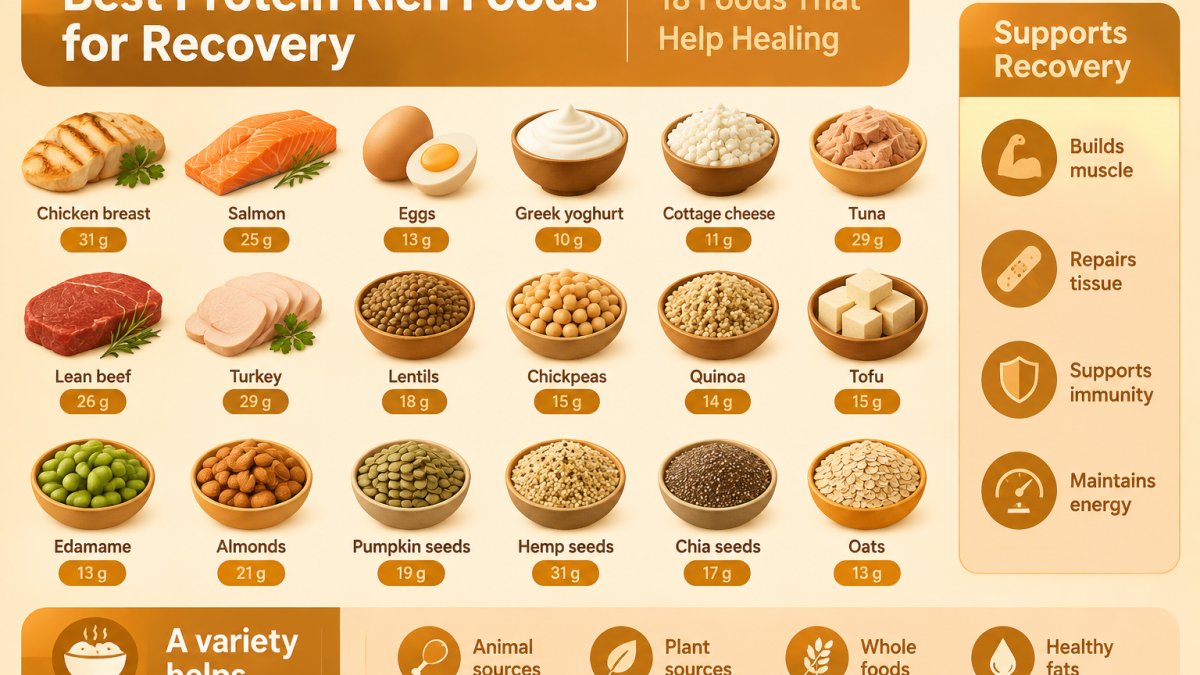
Nutrition: energy, protein and hydration support tissue rebuilding. Nutrition helps, but it does not heal a sore on its own. See my article on nutrition for pressure sore healing.
Moisture: too much or too little both slow healing.
Circulation and underlying illness: these affect how much oxygen and nutrients reach the tissue.
Deeper complications: sometimes the barrier is below the surface.
Guidance from the Wound Healing Society and other clinical bodies supports looking at the whole patient, not just the wound.
Pressure Sore Wound Care Review: What a Proper Assessment Should Cover
A proper pressure sore wound care review should look at the wound, the surrounding skin, your overall health, and the equipment you use to offload pressure.
A good review typically covers:
Wound size, depth and tissue type, measured and recorded
Signs of infection or deterioration
Surrounding skin condition
Pressure-redistribution equipment and how you use it
Nutrition, hydration and weight
Pain and how it is managed
Whether further investigation is needed
Preparation protocols and investigations vary by centre, wound and patient. What matters is that someone is asking the "why" question alongside the "what next" question.
Pro Tip Before your appointment, write down three questions and take them with you. I found that having them on paper stopped me forgetting the most important one.
What Matters Most Before You Contact Your Team
Contact your wound team if a pressure sore stops improving, changes in size, depth, drainage or smell, or if the surrounding skin changes. Seek urgent help for fever, confusion, or rapidly spreading redness.
You are an important member of your own wound-care team. You spend more time with your wound than anyone else. That means your observations matter.
For a fuller patient perspective on the questions worth asking, the NHS pressure ulcer information is a useful starting point alongside your own team's advice.
Frequently Asked Questions
What are the signs that a pressure sore is not healing?
The main signs include a wound that has not reduced in size or depth over several weeks, a wound that gets bigger or deeper, tissue that breaks down again after improving, increasing or changing drainage, new odour, and redness, warmth or swelling in the surrounding skin. Increasing pain where you have sensation, feeling generally unwell, or repeated breakdown in the same spot also matter. Any of these should prompt a review by your wound-care team rather than a wait-and-see approach.
Can a wound heal slowly without being infected?
Yes. A pressure sore not healing does not automatically mean infection. Continued pressure or shear, poor nutrition, moisture damage, reduced circulation and underlying conditions such as diabetes can all slow healing. In my own experience, the wound was sometimes stalled because the offloading was not working, not because of infection. That is why a proper pressure sore wound care review looks at the whole picture, not just the wound surface.
When should I seek medical advice about a pressure sore?
Contact your wound-care team if the wound has not improved over a few weeks, changes in size, depth or drainage, or becomes more painful. Seek urgent assessment the same day for spreading redness or warmth, new odour, fever, confusion or feeling systemically unwell. Do not try to diagnose or treat a suspected infection yourself. If you are unsure which category you fall into, phone your team and describe what you are seeing.
Can pressure or friction stop a pressure sore from healing?
Yes. Pressure and shear remain central barriers to healing, and no dressing, supplement or nutrition plan can compensate for continued pressure on the same area. If a sore is not progressing despite good wound care, ask your team whether the offloading is actually working. A pressure sore causes of delayed healing discussion should always start with pressure redistribution and shear management before other explanations are considered.
A pressure sore that is not healing is frustrating, and it can feel like nothing you do makes a difference. It usually does, once the real barrier is identified. If you want to understand the questions, the barriers and the lessons I wish someone had explained to me, Pressure Sore Recovery: What Nobody Told Me covers them across 24 practical chapters. BUY THE PDF - £9.99 and start asking better questions of your wound-care team.
BUY THE PDF – £9.99
Comments