Why Healed Doesn't Mean Fixed After a Pressure Sore

Table of Contents
Why Healed Doesn't Mean Fixed After a Pressure Sore
Wound Closure and Tissue Remodelling Are Not the Same Thing
Pressure and Shear Management After Healing
The Dangerous Moment: When It Looks Healed
Returning to Sitting After a Pressure Sore or Flap Surgery
Skin Checks After a Pressure Injury: What to Look For
Pressure Sore Recurrence Prevention: Cushions, Support Surfaces and Daily Habits
Nutrition and General Health While Tissue Rebuilds
What I Would Do Differently Now
Frequently Asked Questions
Last Updated: 5 October 2026
Why Healed Doesn't Mean Fixed After a Pressure Sore
I'm Not a Doctor, I'm the Patient.
When a pressure sore finally closes, it feels like the end of something. In my experience, it is closer to the beginning of a different phase.
I'm not a doctor. I'm the patient. This article combines published information with lessons from my own experience of living with serious pressure sores. It is intended to help you understand the subject and ask better questions of your healthcare team, not replace professional medical advice.
Here is the core of it: a closed wound is a milestone, not a finish line. The skin on the surface can seal while the tissue underneath is still rebuilding.

Wound Closure and Tissue Remodelling Are Not the Same Thing
Wound closure is the point at which the surface of the skin has sealed over. Tissue remodelling is the much longer process in which the deeper tissue reorganises and rebuilds its strength. They are not the same event, and they do not finish at the same time.
This distinction matters more than almost anything else in pressure sore recovery. The NHS describes pressure ulcers as damage to skin and underlying tissue caused by pressure, shear, friction or a mix of these, and notes that healing depends on relieving that pressure.
During remodelling, the body lays down new tissue and scar tissue. Scar tissue is not the same as the skin and tissue it replaced. It behaves differently under load. It can be less flexible, and it does not always tolerate pressure and shear the way the original tissue did.
What nobody explained to me is that the surface closing is the body's first priority, not its last. The deeper work continues quietly, and it is slower.
Key Takeaway A closed wound means the surface has sealed. It does not mean the tissue underneath has finished rebuilding or that the area is back to its former strength.
Pressure and Shear Management After Healing
Pressure and shear management does not end when a wound heals. If anything, it becomes the thing that protects everything the healing process achieved.
Pressure is the force that squeezes tissue between a bone and a surface. Shear is the force that pulls and stretches tissue sideways when you slide or shift. Both were likely part of what caused the original sore, and both remain a risk to newly healed tissue.
The NICE guidance on pressure ulcer management is clear that preventing recurrence means continuing to reduce pressure and shear, not just treating the wound. For me, that meant accepting that my cushion and my turning routine were not temporary measures. They were permanent ones.
A common mistake is treating pressure relief as something you do until the wound closes, then easing off. The tissue that just healed is often the most vulnerable tissue you have. It has not earned back its full tolerance yet, and it may never match the original.
Keep using your pressure-redistributing equipment
Keep up your repositioning routine
Avoid prolonged sitting without a plan
Watch for shear when you transfer or slide
Treat any new redness as a signal, not a nuisance
The Dangerous Moment: When It Looks Healed
The most dangerous moment in pressure sore recovery is the one that feels like relief. When the wound closes and the dressing comes off, the natural reaction is to relax. I understand that reaction completely, because I lived it.
The problem is that the relief arrives before the risk has gone. The area looks normal. It may even feel normal. But newly healed tissue can still be fragile, and the pressure and shear that caused the first sore have not disappeared.
This is where recurrence often begins, quietly, under skin that looks fine. A bit of extra sitting. A skipped repositioning. A new cushion that does not quite fit. None of it feels like a decision at the time.
Watch Out Relaxing your pressure relief the moment a wound closes is one of the most common ways people trigger a recurrence. The tissue underneath may still be rebuilding, and it needs protecting even when the surface looks healed.
If you take one thing from this article, take this: the weeks and months after closure deserve the same attention as the wound itself. Possibly more.
If you want the fuller version of these lessons, they are gathered in Pressure Sore Recovery: What Nobody Told Me, a 24-chapter PDF built from almost six years of lived experience.
BUY THE PDF - £9.99
Returning to Sitting After a Pressure Sore or Flap Surgery
Returning to sitting after a pressure sore, and especially after flap surgery, should follow an individual clinical plan. There is no universal timeline, and anyone who offers you one is guessing.
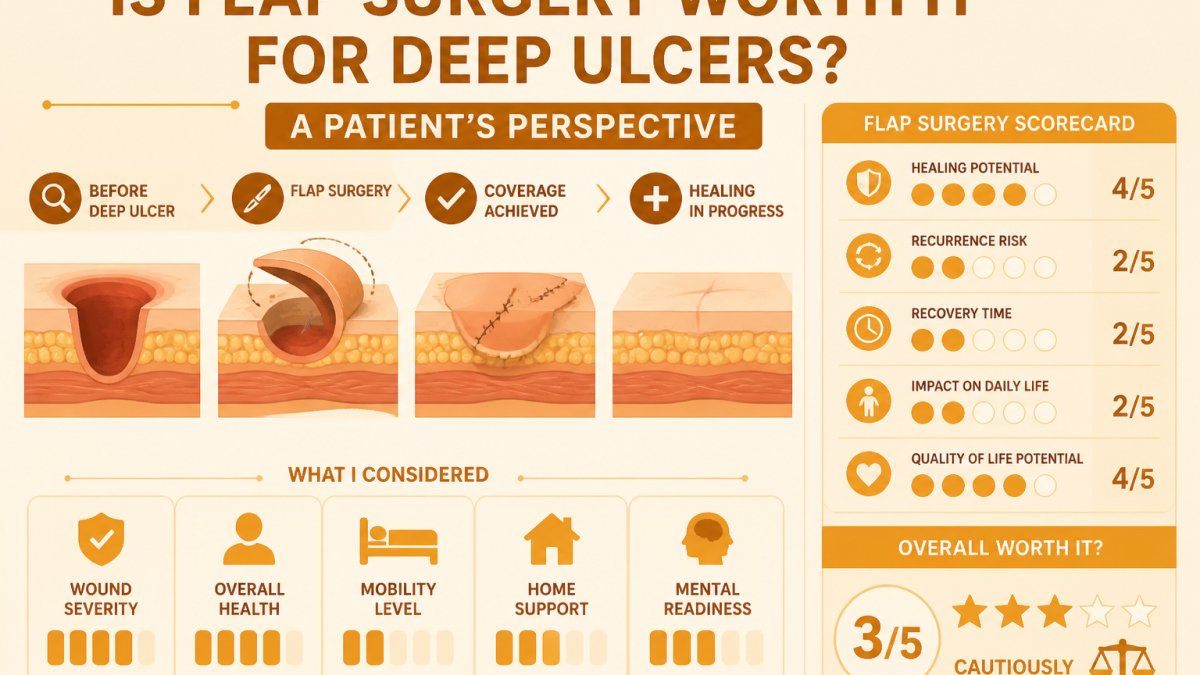
Flap surgery moves tissue to cover the wound, and that tissue needs time and protection while it settles. Your surgical and wound-care team will decide how and when you build up your sitting time. That plan depends on the wound, the surgery, your circulation, your nutrition and your individual circumstances.
What I learned is that the plan is not a suggestion. It is the difference between the surgery working and the surgery failing. Pushing ahead of it because you feel better is a risk not worth taking.
Follow the sitting schedule your team gives you
Build up time gradually, exactly as directed
Stop and report pain, redness or changes
Do not compare your timeline to anyone else's
Ask what signs mean you should reduce sitting again
Skin Checks After a Pressure Injury: What to Look For
Skin checks after a pressure injury are a daily habit, not an occasional glance. The earlier you spot a change, the easier it usually is to act on it.
Check the healed area and the surrounding skin every day. Look for redness that does not fade when pressure is removed, warmth, swelling, a change in colour, or any break in the skin. Look for pain or tenderness too, even if the skin looks fine.
The NHS information on pressure ulcers advises contacting a healthcare professional if a pressure ulcer gets worse or does not improve, and the same applies to a healed area that starts to change. Suspected infection, spreading redness, feeling systemically unwell, or concern about deeper involvement all need prompt professional assessment, not a wait-and-see approach.
A mirror helps for areas you cannot see. So does a carer or family member, if you have one.
Pro Tip Photograph the healed area on your phone every week, in the same light and from the same angle. Small changes are much easier to spot when you have a record to compare against.
Pressure Sore Recurrence Prevention: Cushions, Support Surfaces and Daily Habits
Pressure sore recurrence prevention comes down to three things working together: the right support surface, a consistent daily routine, and honest self-monitoring. Miss one, and the other two carry more weight than they should.
Your cushion or support surface should match your body, your chair and your risk areas, and it should be reviewed if your circumstances change. A cushion that worked two years ago may not be right now. Ask your team to check it.
Daily habits matter just as much:
Reposition on a schedule that suits your plan
Check your skin before and after long periods of sitting
Keep transfers as smooth as you can to reduce shear
Report any change early rather than watching it
Review your equipment with your team regularly
The European Pressure Ulcer Advisory Panel prevention guidance stresses that prevention is an ongoing process, not a one-off fix. That has been true in my experience too.
Nutrition and General Health While Tissue Rebuilds
Nutrition supports healing, but it does not replace pressure relief. That distinction is important. Good nutrition while tissue rebuilds gives your body the materials it needs, but it cannot protect tissue that is still being loaded.
Energy, protein, hydration and overall nutritional status all play a role in how well tissue repairs itself. If you are not eating or drinking enough, healing can slow. A dietitian can assess your individual needs, because those needs vary from person to person.
What I would caution against is treating supplements as a shortcut. Vitamin C, vitamin D, zinc and collagen all have biological roles, but the evidence that supplementing them improves pressure sore healing is mixed and depends on the individual. A nutrient having a role in healing is not the same as a supplement improving it. Ask your team before adding anything.
General health matters too. Circulation, blood sugar control and underlying conditions all affect how tissue holds up.
What I Would Do Differently Now
If I could go back to the moment my first wound closed, I would treat it as the start of the next phase, not the end of the problem. That is the practical heart of why healed doesn't mean fixed after a pressure sore.
I would keep my pressure relief routine exactly as it was
I would check my skin daily without exception
I would ask my team what my individual plan was after healing
I would not ease off because the surface looked fine
I would speak up sooner when something felt wrong
These are lessons from my experience, not medical instructions. Your plan should come from your own wound-care team, because your wound, your surgery and your circumstances are yours alone.
Best For Anyone who has just been told their pressure sore has healed and wants to understand what comes next, and carers supporting someone through that stage.
Recurrence after a pressure sore is common, and the gap between a closed wound and fully rebuilt tissue is where it often starts. You do not have to navigate that gap alone or from memory. Pressure Sore Recovery exists to help you understand it, ask better questions and stay active in your own care, with a 24-chapter PDF built from almost six years of lived experience, covering pressure and shear, flap surgery recovery, nutrition and long-term prevention.
BUY THE PDF - £9.99
Frequently Asked Questions
Can a pressure sore come back after it has healed?
Yes. A healed pressure sore can recur, particularly if pressure and shear are not managed long term. Newly closed tissue and scar tissue do not have the same resilience as uninjured skin, so the area remains vulnerable. Recurrence risk depends on factors such as wound depth, whether surgery was needed, how well pressure is redistributed, nutrition, circulation and underlying conditions. This is why pressure sore recurrence prevention matters after healing, not just during active treatment. Your wound-care team can help you plan how to protect the area.
Why can skin remain vulnerable after a pressure sore closes?
When a wound closes, the surface skin has sealed, but the tissue underneath is still remodelling. This maturation phase can continue for a long time, and the rebuilt tissue may not regain the full strength and elasticity of uninjured skin. Scar tissue is also less tolerant of pressure and shear. That is why skin checks after a pressure injury and ongoing pressure and shear management remain important even when the wound looks healed. Healing depends on individualised factors, so ask your team what applies to your situation.
How should I return to sitting after a pressure sore or flap surgery?
Returning to sitting after a pressure sore or flap surgery should follow an individual clinical plan. There is no universal timeline, and reloading too quickly or for too long can put the healed area at risk. Your team will consider wound depth, whether surgery was performed, the location of the sore, circulation and other factors. In practice, this usually means a gradual, monitored return with specific sitting times and skin checks. Ask your consultant or specialist nurse for a written plan you can follow at home.
Do cushions and support surfaces help prevent pressure sores from returning?
Support surfaces and cushions are part of pressure and shear management, but they do not replace regular pressure relief and skin checks. The right cushion or mattress distributes load more evenly, which reduces peak pressure on vulnerable areas. However, no cushion removes the need to change position, check skin and follow your clinical plan. Ask your team to assess your seating and bed setup, because the right choice depends on your body, mobility and where the previous sore was.
BUY THE PDF – £9.99
Comments