Managing Long Term Bed Rest Wounds: A Patient Guide

Table of Contents
Managing Long Term Bed Rest Wounds: What Nobody Explained to Me
The Problem With Bed Rest: Protecting the Wound vs Protecting the Body
Positioning to Prevent Pressure Ulcers Without Causing New Ones
Shear and Friction: The Damage You Do Not See
Choosing a Pressure Redistribution Mattress for Pressure Sores
Pressure Sore Infection Warning Signs That Need Urgent Assessment
Skin, Moisture and Daily Checks While You Are Confined to Bed
Nutrition, Protein and Hydration When You Cannot Move Much
Returning to Sitting After a Pressure Sore: Planning It With Your Team
Frequently Asked Questions
Last Updated: 7 October 2026
Managing Long Term Bed Rest Wounds: A Patient Guide (Source: NICE guidance on pressure ulcers)
I'm Not a Doctor, I'm a Patient
I'm not a doctor. I'm the patient. This article combines published information with lessons from my own experience of living with serious pressure sores. It is intended to help you understand the subject and ask better questions of your healthcare team, not replace professional medical advice.
Managing Long Term Bed Rest Wounds: What Nobody Explained to Me
Managing long term bed rest wounds is not one job. It is two jobs pulling against each other.
Bed rest takes load off a pressure sore. That part is real, and it matters. But staying in bed for weeks or months brings its own problems: muscle loss, stiff joints, poor circulation, low mood and a body that slowly stops trusting itself.
I have spent prolonged periods on bed rest because of pressure sores. This guide from Pressure Sore Recovery covers what I learned, alongside guidance from NICE guidance on pressure ulcers and NHS information on pressure sores.
Below, we will look at positioning, support surfaces, shear, skin checks, nutrition, sleep, bowel and bladder routines, mental health, and how to plan a gradual return to sitting with your team.
Watch Out Bed rest is not a treatment you can run on your own. Turning schedules, sitting plans and bed-rest duration must be set by your clinical or rehabilitation team, because they depend on the wound, its location and your overall health.
The Problem With Bed Rest: Protecting the Wound vs Protecting the Body
Here is the tension nobody sits you down and explains.
Every hour flat on your back protects the sore from pressure. It also costs you something elsewhere. Muscles weaken. Circulation slows. Joints stiffen. Lung function drops.
So you are not choosing between "good" and "bad". You are balancing two risks.
Pressure sore management is about the wound: offloading, shear control, skin care, infection watch, nutrition.
Complications of prolonged immobility are about everything else: loss of strength and conditioning, reduced circulation, constipation, chest problems, low mood and isolation.
Both lists matter. Neither one cancels the other out.
Risk | What it looks like | What helps |
Pressure damage | New redness or broken skin | Repositioning plan, support surface |
Shear and friction | Skin dragging when moved | Hoist or slide sheet, trained handling |
Muscle loss | Weak legs, hard to sit up | Team-led movement plan |
Circulation | Swelling, cold feet | Position changes, ankle movement |
Low mood | Flat, withdrawn, hopeless | Routine, contact, mental health support |
What I wish I had understood earlier is that protecting the wound and protecting the body are not opposites. They are two halves of the same plan, and only your team can balance them for you.
Positioning to Prevent Pressure Ulcers Without Causing New Ones
Positioning to prevent pressure ulcers is about spreading load, not just shifting it.
You can move off one sore and create another. That happens when the new position puts pressure on a bony point that was previously fine. Heels, ankles, hips and ears are common casualties.
A few principles I learned the hard way:
Change position on the schedule your team gives you, not when it starts to hurt
Keep bony points off hard surfaces
Use pillows or wedges to hold a position, not your own muscles
Never drag yourself up the bed
Check the skin after every move, not just once a day
The schedule is individual. There is no universal turning interval that fits every wound and every person, and anyone who tells you otherwise is guessing.
Shear and Friction: The Damage You Do Not See
Shear and friction are the quiet damage. Friction is skin rubbing against a surface. Shear is deeper: layers of tissue sliding against each other while the skin stays put.
Shear can damage tissue under intact skin. That is why a sore can appear to come from nowhere.
The fix is mechanical, not medical. Use a hoist or slide sheet. Raise the head of the bed only as much as your team advises, because sliding down the bed creates shear. Never let two people grab an arm and a leg and pull.
Choosing a Pressure Redistribution Mattress for Pressure Sores
A pressure redistribution mattress for pressure sores is a support surface designed to spread your weight over a larger area. It does not remove the need to reposition.
There are several broad types, and the right one depends on your wound, your risk level and what your team can provide:
Foam surfaces for lower-risk situations
Dynamic or alternating-pressure surfaces for higher risk or existing sores
Air-fluidised or specialist surfaces for complex wounds
Overlays added to an existing mattress
What most guides miss is that a mattress is only one part of the system. A good surface with poor positioning still fails. A basic surface with excellent positioning can work surprisingly well.
Ask your team two questions: what surface am I on, and why this one? If nobody can answer, that is worth raising.
Pro Tip Photograph your mattress label and any pump settings. When you move between ward, home and clinic, you will be asked what surface you were on, and memory is unreliable.
Pressure Sore Infection Warning Signs That Need Urgent Assessment
[Pressure sore](/post/pressure-sore-management-for-caregivers-a-practical-guide) infection warning signs fall into groups, and the group tells you how fast to act.
Local signs mean contact your wound-care team. Systemic signs mean urgent same-day assessment. Suspected spreading cellulitis or possible bone involvement means urgent professional assessment, and do not self-treat.

Local signs:
Increasing pain at the wound
Spreading redness around the edges
Warmth, new or changed odour
Pus or increased exudate
The wound getting larger or deeper
Systemic signs:
Fever or chills
Feeling generally unwell
Confusion
Rapid heartbeat
Possible deeper involvement:
Spreading cellulitis
Suspected bone involvement
Deeper wounds and longer-standing sores raise the risk of bone infection, but depth alone does not confirm it. Only proper assessment can.
Watch Out Never start antibiotics you have left over, and never assume a wound is fine because it looks unchanged. Suspected infection, deterioration or feeling systemically unwell needs professional assessment, not a wait-and-see approach.
Skin, Moisture and Daily Checks While You Are Confined to Bed
Daily skin checks are the cheapest early-warning system you have.
You are looking for change, not perfection. A new patch of redness that does not blanch when pressed. A blister. A change in skin temperature. A new area of pain.
Moisture matters as much as pressure. Damp skin from sweat, urine or wound exudate breaks down faster. So does very dry, flaky skin.
A simple routine:
Check the whole body once a day, including heels, ears, back of the head and between skin folds
Use a mirror or ask someone to check what you cannot see
Clean and dry gently, then protect the skin
Change sheets promptly if they are damp
Report any new redness or broken skin the same day
In my experience, the person who spots the problem first is usually the patient or the carer, not the clinician. That is not a criticism of clinicians. It is simply who is there.
Nutrition, Protein and Hydration When You Cannot Move Much
Nutrition supports healing. It does not replace offloading.
Energy, protein and fluid give your body the raw material to rebuild tissue. Without enough, healing slows. But no amount of protein compensates for a wound that is still being loaded.
Your team may assess your nutritional status and set targets for you. Those targets are individual. They depend on your weight, your wound, your kidney function and other conditions.
Practical points I found useful:
Spread protein across the day rather than one large meal
Keep fluids within whatever limit your team sets
Ask for a dietitian referral if you are losing weight or struggling to eat
Treat supplements as additions, not replacements
On supplements: vitamin C, vitamin D, zinc and collagen all have biological roles in tissue repair. That is not the same as evidence that supplementing them improves healing in every patient. Evidence is mixed, and it depends on whether you were short of that nutrient in the first place. Ask your team before adding anything.
For more on this, see our article on nutrition and pressure sore healing.
Returning to Sitting After a Pressure Sore: Planning It With Your Team
Returning to sitting after a pressure sore is a staged process, not a switch you flip.
The wound has to be ready. Your team will judge that from how it looks, how it has progressed and what caused it in the first place.
What nobody tells you is how much this affects your head. After months in bed, sitting up can feel frightening. That is normal.
A few things to plan for:
A written sitting schedule with times and limits
Skin checks before and after each period
A clear rule for what to do if redness appears
A plan for what happens if you have a setback
Setbacks happen. They are not failure. They are information.
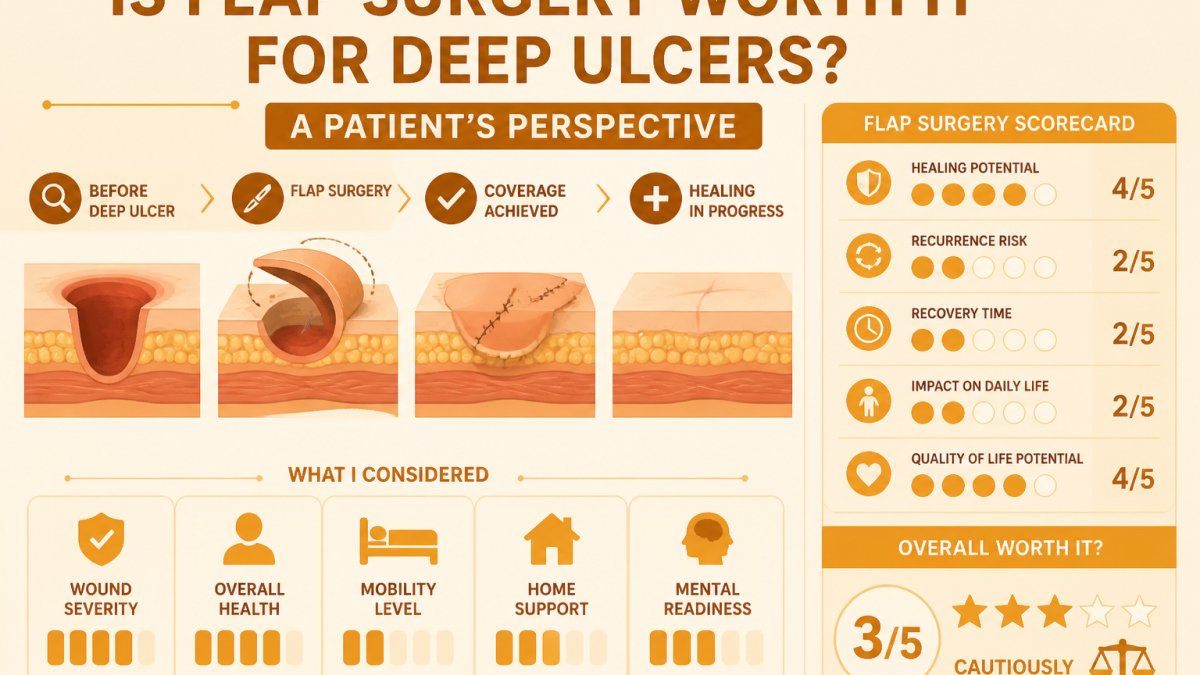
If you are preparing for or recovering from flap surgery, our flap recovery article covers that separate process in more detail.
Key Takeaway The single most useful thing you can do during long bed rest is keep a written record: position changes, skin checks, what you ate, what you noticed. It turns vague worry into specific questions your team can answer.
Long bed rest is hard, and the system around it is not always set up to help. You deserve better information than most of us get.
Pressure Sore Recovery exists because of that gap.
BUY THE PDF - £9.99
You are an important member of your own wound-care team. Get informed, ask better questions, and work with your clinicians rather than around them.
Frequently Asked Questions
How do you care for a pressure sore when you are on bed rest?
Bed rest reduces some loading on the wound, but it does not remove pressure or shear on its own. Care usually combines a support surface chosen by your team, a repositioning plan they set for you, daily skin and moisture checks, and keeping the wound dressing regimen exactly as prescribed. Nutrition, protein and hydration support tissue repair but cannot compensate for continued pressure. Ask your wound-care team what to check each day, what changes to report, and who to contact out of hours. Do not change turning routines, dressings or sitting plans without their input.
What type of mattress can help manage pressure sores?
There is no single mattress that suits every pressure sore. Options range from high-specification foam and static overlays to alternating-pressure and low-air-loss systems, and the right choice depends on your wound stage, location, body weight, shear risk, whether you need to sit up for meals or transfers, and what your NHS trust or centre can supply. Ask your tissue viability nurse or district nurse to assess you on the surface you actually use at home, not just in hospital. A pressure redistribution mattress for pressure sores is one part of the plan, not a replacement for repositioning.
What are the warning signs that a pressure sore may need urgent medical attention?
Get professional assessment the same day if you notice spreading redness or warmth around the wound, increasing pain, new or worsening odour, pus or a sudden change in exudate, a wound that is getting larger or deeper, or a dark area at the wound edge. Fever, chills, feeling generally unwell, confusion or a rapid heartbeat are systemic signs and need urgent medical assessment, not home treatment. Suspected spreading cellulitis or possible bone involvement also needs urgent review. Never self-treat a significant infection, and never assume every infection becomes osteomyelitis.
How should someone prepare to sit or become more active again after bed rest?
Returning to sitting after a pressure sore is a rehabilitation decision, not a milestone you reach on a set date. Healing depends on wound severity and depth, location, pressure and shear, infection, circulation, nutrition, underlying conditions and whether surgery was needed, so timelines vary. Ask your team for a graded plan: how long to sit, on what surface, how often to check the skin, and what signs mean you stop and go back to bed. Build strength and circulation gradually as advised, and treat any new redness or pain as a reason to pause and call your team.
BUY THE PDF – £9.99
Comments