Nutrition for Pressure Ulcer Healing: What I Wish I'd Known Earlier

Last Updated: November 5, 2026
Quick Summary
Nutrition for pressure ulcer healing means giving your body enough energy, protein, fluid and micronutrients to rebuild damaged tissue, alongside pressure relief rather than instead of it. Wound repair uses up energy and protein, so your needs often rise, and poor intake can slow tissue repair. Ask your dietitian or wound-care team to set individual targets for you.
Protein needs are higher than for general health; ask your dietitian what target they are aiming for with you.
Spread protein across the day with a protein food at every meal and most snacks.
Eat by the clock, not by hunger, and keep easy snacks like yoghurt and milk within reach.
Supplements are a top-up, not a replacement for meals, and costs vary so get advice first.
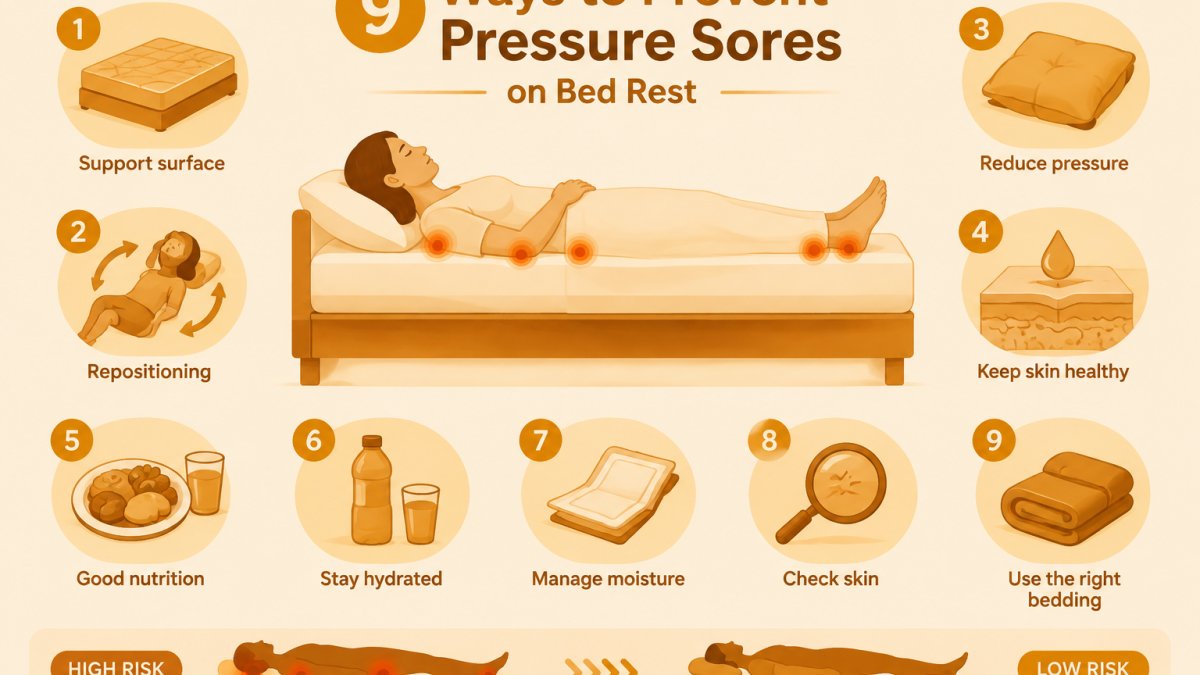
Nutrition alone cannot heal a pressure sore; pressure redistribution and shear management remain central.
Table of Contents
Why Nutrition Matters for Pressure Ulcer Healing
I'm Not a Doctor, I'm the Patient.
I'm not a doctor. I'm the patient. This article combines published information with lessons from my own experience of living with serious pressure sores. It is intended to help you understand the subject and ask better questions of your healthcare team, not replace professional medical advice.
Nutrition for pressure ulcer healing is the food and fluid support your body needs to rebuild damaged tissue, and it works alongside pressure relief, not instead of it.
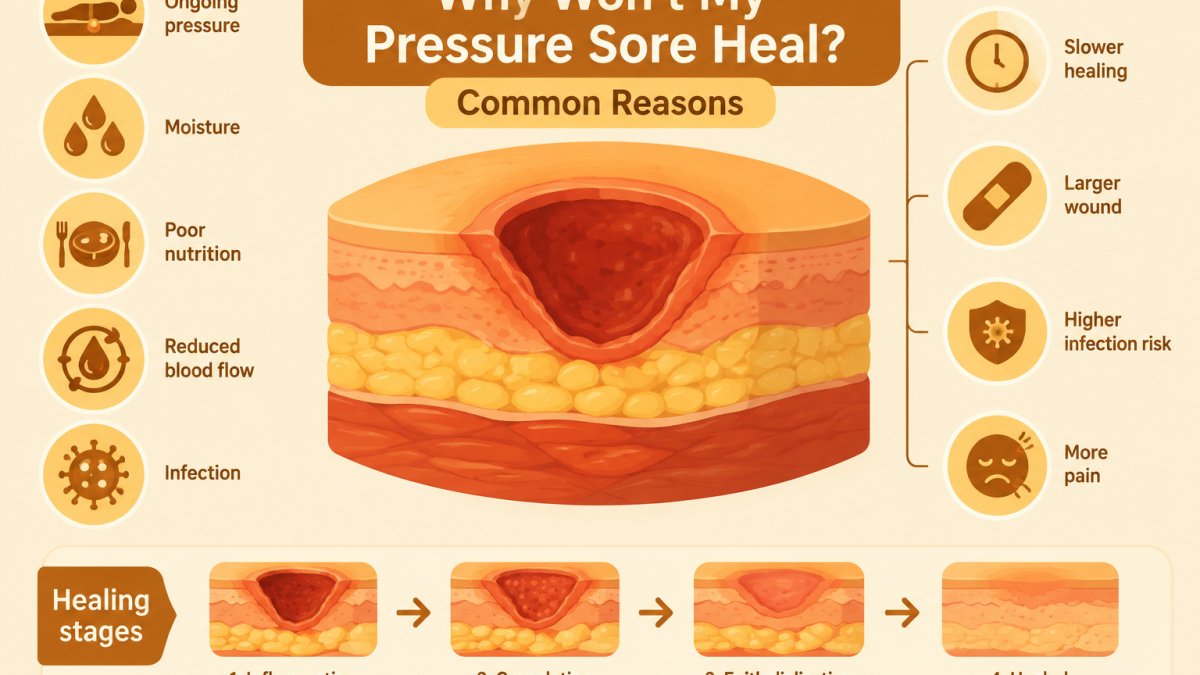
A pressure sore is an area of damaged skin and underlying tissue caused by sustained pressure, or pressure combined with shear. Healing needs raw materials: energy, protein, fluids and micronutrients. NICE guidance on pressure ulcers sets out that nutrition and hydration are part of good pressure ulcer care.
What I Wish I Had Understood Earlier
I used to think nutrition was something the dietitian dealt with if there was time. That was wrong.
Wound repair uses up energy and protein, so your needs often rise.
Poor intake slows tissue repair and can raise the risk of further breakdown.
Nutrition supports healing but cannot cancel out ongoing pressure or shear.
That last point matters most. No diet compensates for staying on the same spot.
Protein Needs for Pressure Ulcers: How Much and What Kind
Protein needs for pressure ulcers are higher than for general health, because protein supplies the amino acids used to rebuild tissue. NHS information on pressure ulcers notes that a good diet, including enough protein, supports healing.
How much is individual. Your dietitian or wound-care team will assess your weight, wound and general health before suggesting a target.
On quality, I lean towards high-protein, lower-carbohydrate eating because it suits my appetite and blood sugar.
For a fuller breakdown of how much to aim for and which sources help, see our guide to protein intake for chronic wound repair.
Best Protein-Rich Foods for Recovery: A British Shopping List
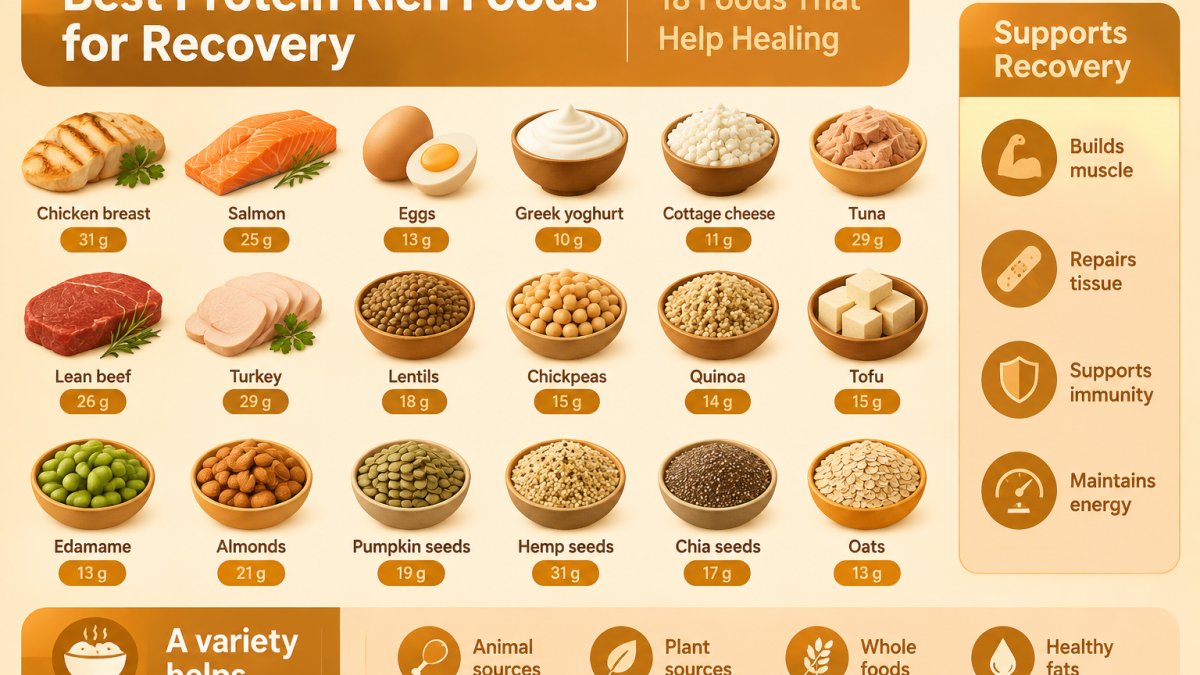
The best protein-rich foods for recovery are everyday British foods you can actually buy, store and eat during bed rest.

A rough guide to portions and what they contribute.
Eggs: two large eggs are roughly 12-13 g of protein. Boiled, scrambled, poached or in an omelette. Easy to eat when chewing is tiring.
Tinned fish: a small tin of tuna, sardines or mackerel is roughly 15-20 g. On toast, in a jacket potato or straight from the tin if appetite is low.
Chicken and turkey: a palm-sized portion is roughly 25-30 g. Batch-cook, slice and freeze in single portions so a carer can reheat one at a time.
Practical British meal and snack ideas that are easy to eat in bed:
Breakfast: porridge made with milk, stirred through with Greek yoghurt and a spoon of peanut butter.
Lunch: tinned sardines on wholemeal toast, or a bowl of lentil soup with a cheese scone.
Evening: shepherd's pie made with lean mince and lentils, or a chicken and vegetable stew with mashed potato.
For a fuller breakdown of how much to aim for and which sources help, see our guide to protein intake for chronic wound repair.
Here is a rough guide to everyday portions and what they contribute, as a starting point for a conversation with your dietitian.
Food | Typical portion | Rough protein |
Eggs | Two large eggs | 12-13 g |
Tinned fish | Small tin of tuna, sardines or mackerel | 15-20 g |
Chicken and turkey | Palm-sized portion | 25-30 g |
Greek yoghurt | 150 g pot | 12-15 g |
Milk | 200 ml glass | 7 g |
Cheese | 30 g piece | 7-8 g |
Beans and lentils | Half-tin portion | 7-9 g |
Firm tofu | 100 g | 8 g |
Calories, Under-Eating and the Damage of Fasting
Enough calories matter as much as protein. If energy intake is too low, your body may break down protein for fuel instead of using it to repair tissue.
During prolonged bed rest my appetite was poor, and I lost weight without realising how much. Under-eating is easy to miss when you are not moving much.
Fasting and strict calorie restriction can undermine healing.
Practical steps that helped me:
Eat by the clock, not by hunger.
Keep easy snacks within reach: yoghurt, cheese, nuts, milk.
Ask for a referral to a dietitian if weight is dropping.
Vitamins and Minerals: Vitamin C, Vitamin D, Vitamin A, Zinc and Iron
Vitamins and minerals have clear biological roles in wound healing. The evidence that extra supplementation speeds healing is much less clear.
Vitamin C is needed for collagen formation.
Vitamin D supports bone and muscle health and immune function.
Vitamin A plays a role in tissue repair.
A nutrient having a job in healing does not mean more of it heals faster. Deficiency should be identified and treated, usually through blood tests and clinical assessment.
For the detailed evidence, read our articles on vitamin C for pressure sore healing and vitamin D for pressure sore healing.
Collagen: What It Can and Cannot Do
Collagen is a structural protein in skin and tissue, and your body builds it using amino acids and vitamin C. Collagen supplements are marketed heavily, but the evidence that taking them speeds pressure ulcer healing is limited and mixed. I treat collagen as optional, not essential. If you are thinking of buying collagen, read our fuller review of collagen supplements for wound recovery first.
Hydration, Gut Health and Eating During Prolonged Bed Rest
Fluid intake supports circulation and tissue repair, and dehydration is easy to miss when you are not thirsty.
Gut health matters too. Opiates, immobility and low fibre can cause constipation, which kills appetite. Fibre, fluid and gentle movement where possible all help.
Eating during bed rest brings its own problems:
Reclining makes swallowing and chewing harder.
Appetite is lower with little activity.
Carers may not realise how little is being eaten.
I found small, soft, high-protein meals easiest. A carer keeping a simple food diary for a week can be genuinely useful at appointments.
Nutrition Supplements for Pressure Ulcers: Protein Shakes and Specialist Wound Supplements
Nutrition supplements for pressure ulcers can help when food alone is not enough, but they are a top-up, not a replacement for meals.
Broadly, there are three things people mean by 'supplements':
Standard protein powders and shakes. These add protein and some energy. They are not designed specifically for wounds and are not usually prescribed on the NHS, though a dietitian may suggest one.
Oral nutritional supplements (ONS). These are the milky or juice-style drinks, powders and puddings, often prescribed after a dietitian assessment, designed to add energy, protein and micronutrients when ordinary food intake is too low. BAPEN guidance on malnutrition and nutritional support explains how ONS fit into treating malnutrition.
Specialist wound-care formulas. Some ONS products add specific nutrients such as arginine, glutamine, zinc or antioxidants, marketed for wound healing. The evidence for these is mixed and limited, and they are not a routine recommendation for everyone. Whether one is appropriate depends on your wound, your intake and your overall health, and that is a decision for your wound-care team or dietitian, not a label.
What I learned:
Supplements work best alongside real food, not instead of it. They add to a diet that is already as good as it can be.
Costs vary, so get advice before buying anything yourself. A prescribed ONS and a shop-bought shake are not the same thing.
A multivitamin and mineral supplement may be suggested if intake is poor, but high-dose single nutrients are not routine and should not be started without advice.
If you are choosing a shake, our patient guide to top protein supplements for wound healing is a useful starting point.
Watch out: buying several different supplements at once, or taking high-dose vitamins alongside a prescribed ONS, can mean you are doubling up on the same nutrients without anyone checking.
If you want the full picture of what I learned across nearly six years, including the questions I wish I had asked, the 24-chapter guide Pressure Sore Recovery: What Nobody Told Me is available here: BUY THE PDF - £9.99.
Malnutrition Screening for Pressure Injuries: Blood Tests and Dietitian Support
Malnutrition screening for pressure injuries should be routine, because poor nutritional status raises the risk of pressure damage and slows healing. Screening tools and blood tests help your team spot problems early.
What to expect:
A screening questionnaire about weight, appetite and recent intake.
Blood tests to check for deficiencies and underlying issues.
A dietitian assessment if you are at risk.
Ask for a referral if nobody has mentioned it. In my experience, you often have to prompt. Blood tests and protocols vary by centre, wound and patient, so treat any single set of results as part of the picture, not the whole answer.
What I Would Do Differently Now
Ask for a dietitian early, not after months of poor intake.
Keep a simple food and fluid diary to bring to appointments.
Treat protein and calories as part of the treatment plan.
Question any restrictive diet before starting it.
Nutrition Alone Cannot Heal a Pressure Sore
Nutrition alone cannot heal a pressure sore. Pressure redistribution and shear management remain central. Dressings, supplements and good food cannot compensate for continued pressure on the same area. Nutrition supports the repair your body is already trying to do, and it works best inside a full care plan.
Frequently Asked Questions
Can nutrition alone heal a pressure sore?
No. Nutrition supports pressure ulcer healing, but it cannot replace pressure relief and clinical wound care. If pressure and shear continue, no amount of protein, calories or supplements will close the wound. Nutrition works alongside offloading, dressings, infection control and, where needed, surgery. Think of it as one essential part of a wider care plan, not a standalone cure. Ask your wound-care team how your nutrition fits with your pressure-relief plan.
How much protein do you need for a pressure ulcer?
Protein needs for pressure ulcers are usually higher than for general health, but the right amount depends on your wound, body weight, kidney function and overall health. There is no single figure that suits everyone. A dietitian can assess your individual needs and account for any kidney or liver conditions. Do not guess at high-protein targets or start supplements without advice, especially if you have underlying health conditions.
Do protein shakes or wound supplements help pressure ulcers heal?
Oral nutritional supplements and protein shakes can help when your normal diet is not meeting your needs, for example during illness, poor appetite or prolonged bed rest. They are not automatically necessary for everyone. Evidence for specialist wound-healing supplements is mixed and limited. Ask your dietitian whether supplements are appropriate for you before buying them, and remember they do not replace pressure relief or clinical care.
When should someone with a pressure ulcer see a dietitian?
Ask for a dietitian referral if you are losing weight, eating poorly, have a wound that is not progressing, or have multiple pressure injuries. Malnutrition screening for pressure injuries should be part of your assessment. A dietitian can check your nutritional status, suggest practical changes and advise on supplements if needed. You can ask your GP, district nurse or wound-care team to refer you. Do not wait until you are severely undernourished.
Healing a pressure sore takes more than good intentions, and nutrition is one part of a wider plan you help steer. At Pressure Sore Recovery, our 24-chapter PDF gathers the practical lessons on protein, collagen, infection, surgery and prevention that I wish I had been given at the start. Get started with Pressure Sore Recovery and ask your team better questions from your very next appointment.
Comments