Why Chronic Wounds Fail to Heal: A Patient's Guide

Table of Contents
Why Chronic Wounds Fail to Heal
The Causes of Chronic Wounds: What Stops Healing
Unrelieved Pressure and Shear
Infection and Bacterial Load
Poor Circulation and Tissue Oxygen
When a Pressure Sore Is Not Healing: Red Flags
Recognising Signs of Wound Infection
Local Signs in the Wound
Systemic Signs You Should Not Ignore
How Long Do Chronic Wounds Take to Heal
What You Can Do: Taking an Active Role in Your Recovery
Frequently Asked Questions
Last Updated: 16 October 2026
Why Chronic Wounds Fail to Heal: A Patient's Guide (Source: NICE guidelines on the management of pressure ulcers)
I'm Not a Doctor, I'm a Patient
I'm not a doctor. I'm the patient. This article combines published information with lessons from my own experience of living with serious pressure sores. It is intended to help you understand the subject and ask better questions of your healthcare team, not replace professional medical advice.
Why Chronic Wounds Fail to Heal
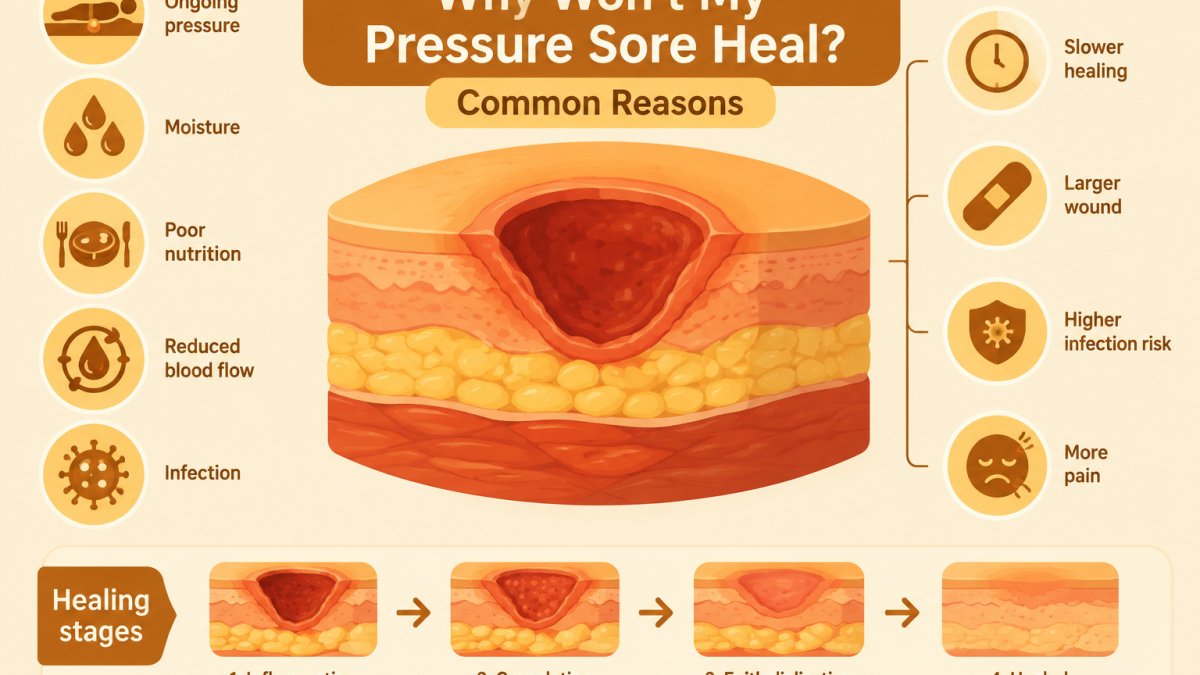
A chronic wound is one that stops progressing through the normal healing phases and stalls at some point in the process. Wounds that fail to heal often do so because the underlying cause, the thing that created the wound in the first place, is still active. For a pressure sore, that cause is almost always pressure or shear, or both together.
What I learned from nearly six years of living with serious pressure sores is this: you cannot dress your way out of a pressure problem. No dressing, no cream, no supplement will heal a wound if the pressure that caused it is still there. This is the single most important thing to understand about why chronic wounds fail to heal.
I emphasise this point constantly because it changes everything about how you approach your recovery. If your wound isn't healing, the first question isn't "What dressing should I use?" It's "Is the pressure actually relieved?" Everything else, infection management, nutrition, wound care, builds on that foundation.
Key Takeaway Chronic wounds stall because the cause (usually pressure or shear for pressure sores) remains active. Healing cannot progress without addressing the root problem first.
The Causes of Chronic Wounds: What Stops Healing
Several interconnected factors can trap a wound in a non-healing state. These factors often feed into each other, making the situation worse the longer they persist.
Unrelieved Pressure and Shear
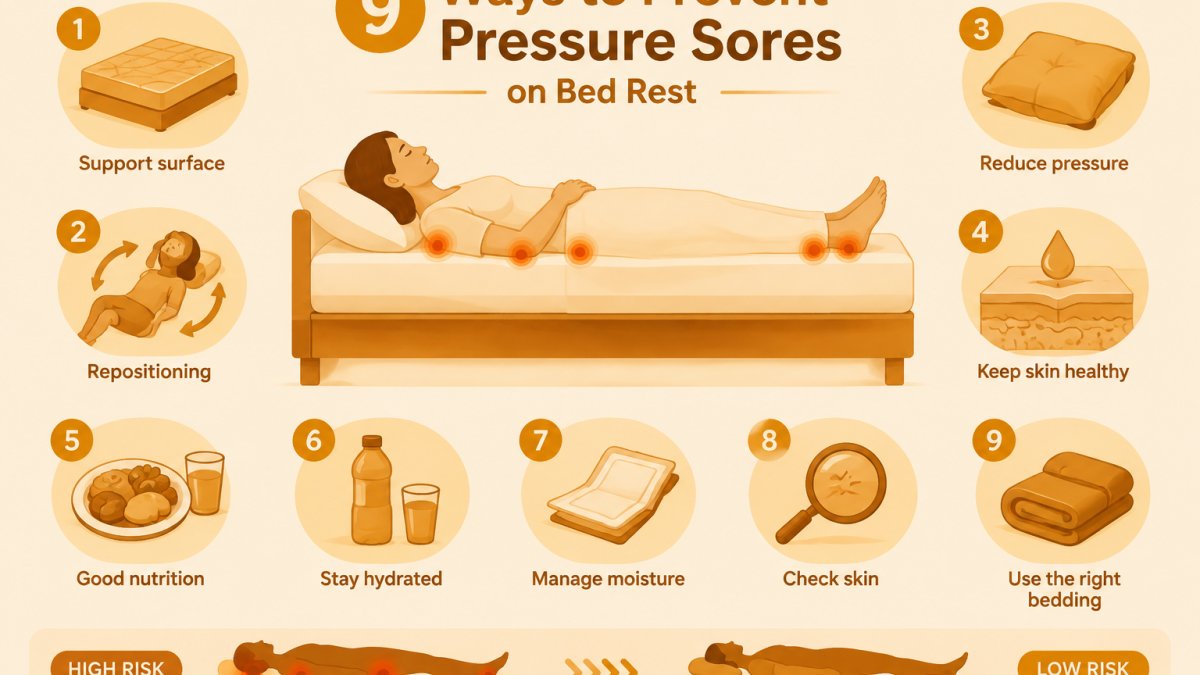
Pressure and shear are the primary drivers of pressure sore development and the primary barriers to healing. If you're still experiencing pressure where the wound is, the wound will not heal. Full stop.
Pressure is the force pressing down on tissue. Shear is the sideways force that stretches and damages tissue at the wound edges. Both reduce blood flow to the area. Both damage the tissue further each time you sit or lie without proper offloading. Both prevent the wound from progressing through the healing phases.
What nobody explained to me at first was that "relieving pressure" isn't a one-time action. It's continuous. If you sit for eight hours without moving, you've re-injured the area. If you lean to one side, you've concentrated pressure on a new spot. If your cushion or mattress is breaking down, the pressure relief is degrading.
Watch Out Continuing to apply pressure to a healing wound re-injures it daily. Even small amounts of ongoing pressure prevent the tissue from moving forward through the healing phases. This is why some wounds never progress despite excellent nutrition and infection control.

Infection and Bacterial Load
Infection slows healing significantly. Bacteria consume nutrients and oxygen that the wound needs to progress. An infected wound diverts immune resources away from tissue repair and towards fighting the infection itself.
What's important to understand is that not all bacteria in a wound means clinical infection. Wounds naturally contain bacteria. Clinical infection happens when bacterial load becomes high enough that it overwhelms the wound's ability to heal, or when the bacteria invade deeper tissue.
A heavily colonised wound, one with high bacterial load but not yet clinically infected, still heals more slowly than a clean wound. This is why wound care teams talk about "bioburden" and why some wounds benefit from antimicrobial dressings or cleansing protocols even when there's no obvious infection.
Poor Circulation and Tissue Oxygen
Healing tissue needs oxygen. Oxygen fuels the cells that rebuild tissue. Wounds in areas with poor blood supply heal more slowly. Chronic conditions like diabetes, vascular disease, or prolonged immobility reduce circulation further.
For pressure sores specifically, the initial injury damages blood vessels. The tissue underneath the wound is often compromised before you even see the surface damage. If circulation to that area was already borderline, the wound may struggle to get the oxygen it needs to progress.
When a Pressure Sore Is Not Healing: Red Flags
Not all wounds that look static are truly stalled. Sometimes a wound is progressing but very slowly. Sometimes it's genuinely stuck. The difference matters because it determines what questions you should be asking your wound-care team.
A wound that is not healing typically shows one or more of these signs:
No visible progress over several weeks despite pressure relief
Increasing size or depth
Deterioration after initial improvement
Persistent drainage or odour
Surrounding skin becoming redder, warmer, or more swollen
The wound bed looks pale, dry, or has areas of dead tissue (black or grey)
These signs suggest either that pressure relief isn't adequate, infection is present, or circulation is severely compromised. Sometimes it's all three.
Recognising Signs of Wound Infection
Infection is one of the most serious complications of a non-healing pressure sore. Untreated infection can spread to surrounding tissue and, in severe cases, to bone. This is why recognising early signs matters.
Local Signs in the Wound
Local signs are changes in the wound itself that suggest bacterial growth is outpacing the wound's defences.
These include:
Increased or foul-smelling drainage
Redness, warmth, or swelling around the wound edges
Pus or purulent material
Rapid increase in wound size
Sudden change in wound appearance (colour, drainage type, or odour)
Tissue that appears grey, black, or sloughy (wet, stringy dead tissue)
Pain that increases without an obvious reason
If you notice any of these, contact your healthcare team. Don't wait. Early assessment prevents complications.
Systemic Signs You Should Not Ignore
Systemic signs are whole-body signs that suggest infection is spreading beyond the wound itself. These are more serious and need urgent professional assessment.
Systemic signs include:
Fever or chills
Feeling unusually tired or unwell
Confusion or difficulty concentrating
Rapid heartbeat
Nausea or vomiting
Spreading redness or warmth in the skin around the wound
Swollen lymph nodes
If you experience any systemic signs, seek medical attention promptly. Do not attempt to treat infection at home. Your healthcare team needs to assess whether infection has spread and whether antibiotics or other treatment is needed.
Watch Out Spreading cellulitis, fever, or signs of systemic illness need professional assessment immediately. Self-treatment of significant infection is dangerous and can allow serious complications to develop.
How Long Do Chronic Wounds Take to Heal
This is the question everyone asks, and the honest answer is: it depends on many individual factors.
Healing time depends on:
Wound depth and size
Location of the wound
Whether pressure and shear are truly relieved
Presence and type of infection
Your circulation and overall health
Your nutritional status
Whether surgery is needed
Your age and any underlying conditions
A shallow pressure sore in a good location with excellent pressure relief and no infection might heal in weeks. A deep wound with poor circulation, active infection, or ongoing pressure might take months or years. Some wounds require surgery to heal.
What I wish I'd understood earlier is that healing isn't linear. A wound might progress steadily for weeks, then plateau. It might seem to worsen briefly before improving. It might heal to a point and then stall if pressure isn't maintained or if infection develops.
This is why your wound-care team monitors your wound regularly. They're tracking whether it's progressing, stalled, or deteriorating. If it's stalled, that's the signal to reassess what's preventing healing and adjust your plan.
Pro Tip Ask your wound-care team specifically: "What does healing look like for my wound?" and "What should I watch for that would tell me progress is happening?" This helps you recognise improvement even when it's slow.
What You Can Do: Taking an Active Role in Your Recovery
You are an essential member of your own wound-care team. Your healthcare professionals bring expertise in wound assessment and treatment. You bring knowledge of your own body, your daily pressures, and what's actually happening between appointments.
Pressure relief is non-negotiable. You cannot heal a pressure sore while sitting or lying on it. Work with your team to get equipment that genuinely relieves pressure where your wound is. Test it. If it doesn't feel right, say so.
Monitor your wound actively. Take photos regularly (same angle, same lighting). Note any changes in size, colour, drainage, or odour. Keep a simple log. Bring this to your appointments. Changes you notice might be invisible to someone seeing your wound every few weeks.
Ask about infection risk. If your wound isn't healing, ask whether infection is suspected. Ask what signs you should watch for. Ask whether swabs have been taken and what they showed. Ask what the plan is if infection develops.
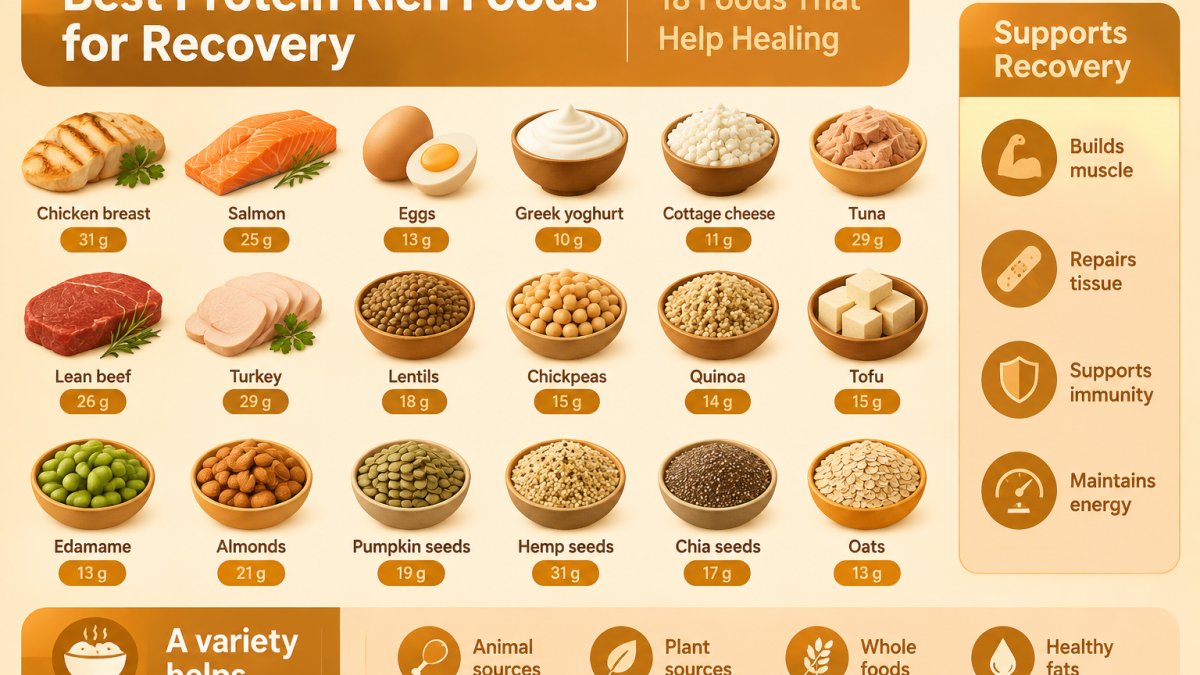
Nutrition matters, but it's not magic. Eat enough protein. Stay hydrated. If you're struggling to eat enough, tell your team. But understand that nutrition alone won't heal a wound that's still under pressure. It supports healing that's already happening.
Be honest about what's feasible. If your pressure relief plan isn't working because it's uncomfortable or impractical, say so. Your team can adjust. A plan you can't actually follow is worse than no plan.
Ask questions. Ask why your wound isn't progressing. Ask what each treatment is meant to do. Ask what success looks like for your wound. Ask what red flags you should watch for. The answers guide your own monitoring and help you spot problems early.
Chronic wounds fail to heal because the cause, usually unrelieved pressure, persists. Infection, poor circulation, and inadequate nutrition make healing harder. But understanding why your wound is stalled is the first step to changing it.
Your healthcare team has the expertise to assess your wound and recommend treatment. You have the knowledge of your own body and your daily reality. Together, you're far more likely to identify what's blocking healing and address it.
If your wound isn't progressing, don't accept "it's fine" without understanding why. Ask questions. Insist on pressure relief that actually works. Monitor actively. And remember: you're not just waiting for healing to happen. You're an active part of making it happen.
For a deeper dive into pressure relief, nutrition, infection management, and the practical questions to ask your healthcare team, the 24-chapter guide Pressure Sore Recovery: What Nobody Told Me covers the lessons I wish someone had explained when I first developed pressure sores. BUY THE PDF - £9.99
Frequently Asked Questions
Why do chronic wounds fail to heal even with treatment?
Chronic wounds stall when one or more healing barriers persist: unrelieved pressure or shear that keeps damaging tissue, infection that overwhelms the immune system, poor circulation that starves tissue of oxygen, or nutritional deficiency that limits the body's ability to rebuild. Often it's a combination. The wound cannot progress through healing phases while these barriers remain. This is why identifying and addressing the root cause, not just treating the wound surface, is essential.
Can pressure alone stop a wound from healing?
Yes. Continued pressure or shear prevents healing completely. Even the best dressings, nutrition or medical care cannot compensate for ongoing pressure. The wound needs offloading, genuine pressure relief, to progress. This is why wheelchair positioning, pressure-relieving surfaces, regular position changes and avoiding prolonged sitting or lying on the affected area are not optional; they are fundamental to healing. Without them, the wound will not heal.
What are the signs of wound infection I should watch for?
Local signs include increased redness, warmth, swelling, pus, odour, or a change in wound appearance or drainage. Systemic signs, fever, chills, feeling unwell, fatigue, or spreading redness beyond the wound, suggest the infection is affecting your whole body. If you notice any of these, contact your healthcare team promptly. Do not try to treat suspected infection yourself. Spreading cellulitis or signs of deeper infection need professional assessment urgently.
How long should I expect a chronic wound to take to heal?
There is no fixed timeline. Healing depends on wound depth and severity, location, whether pressure is relieved, infection status, your circulation, nutrition, underlying health conditions and individual factors. A shallow wound with good pressure relief might improve in weeks; a deep wound with complications may take months or longer. Your healthcare team can give you a more realistic timeframe based on your specific wound, but avoid expecting a predictable schedule. Progress is not always linear.
BUY THE PDF – £9.99
Comments